Welcome to the official website of Nanjing Tamso Optoelectronics Co., Ltd.
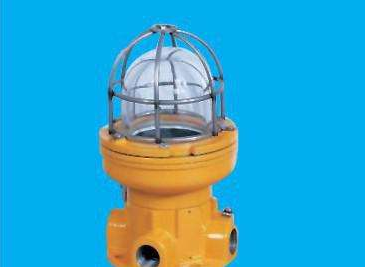
Common marine lighting equipment includes: 1. **Navigation Lights**: These are essential for ensuring that vessels are visible to one another at night or in poor visibility conditions. Their advantage lies in preventing collisions by indicating the position and direction of the vessel. 2. **Deck Lights**: Used to illuminate the deck area for safety and operational efficiency. The advantage is improved visibility for crew members during nighttime operations, reducing the risk of accidents. 3. **Searchlights**: Powerful lights used for searching and signaling. Their advantage is the ability to illuminate large areas or objects at a distance, which is crucial for rescue operations or navigating in dark conditions. 4. **Anchor Lights**: These are used to indicate that a vessel is anchored. The advantage is that they help prevent collisions by making the anchored vessel visible to other boats. 5. **Floodlights**: Used for illuminating larger areas, such as the deck or the surrounding water. Their advantage is enhanced safety and security during nighttime operations. 6. **Signal Lights**: Used for communication between vessels or to signal distress. The advantage is effective communication, which is vital for safety at sea. Each type of lighting serves a specific purpose and contributes to the overall safety and efficiency of marine operations.
Jul 21,2020
Keywords: Marine Lighting
A ship is a relatively special mode of transportation, and we rarely see lights on ships, unless they are very large vessels; generally, cargo ships do not have them. However, ships also need to operate at night, which requires lights for illumination, and there are various types of lights. So, do you know what common marine lights are? There are ceiling lights, energy-saving lights, and wall lights among others, which I will introduce in detail below. Additionally, do you know what the advantages of using marine lights are? Let's explore this in detail.
Common types of marine lights:
Common types of marine lights include ceiling lights, energy-saving lights, and wall lights. Here is a detailed introduction:
1. Ceiling Lights
Generally, commonly used ceiling lights include square cover ceiling lights, round ball ceiling lights, pointed flat round ceiling lights, half-round ball ceiling lights, half-flat ball ceiling lights, and small rectangular cover ceiling lights. Marine lighting manufacturers indicate that ceiling lights are usually suitable for use in various rooms, and different functional rooms can adopt this installation method to achieve illumination. The manufacturers emphasize that as long as there is a ceiling to attach to, installation is very simple, and the styles are quite elegant.
2. Energy-Saving Lights
Among marine lights, the most widely used is the energy-saving light, which has superior brightness and lifespan compared to ordinary incandescent bulbs, especially known for its energy-saving reputation. High-quality marine lighting manufacturers introduce energy-saving lights in U-shaped, spiral, and petal shapes, with power ranging from 3 watts to 40 watts, and energy-saving lights can generally be installed in downlights, pendant lights, ceiling lights, etc.
3. Wall Lights
Common wall lights introduced by marine lighting manufacturers include double-headed magnolia wall lights, double-headed olive wall lights, double-headed drum wall lights, double-headed lace cup wall lights, jade column wall lights, and mirror wall lights. Reputable marine lighting manufacturers indicate that the installation height can be adjusted as needed. Moreover, these products are relatively moderately priced and come in various styles, making them very popular.

Advantages of using marine lights:
The advantages of using marine lights are reflected in their strong shock resistance, comprehensive functionality, and being environmentally friendly with high safety. Here is a detailed introduction:
1. Strong Shock Resistance
Marine lights have a good encapsulation structure that is not easy to fall off, allowing them to withstand long-term use in environments with significant shock forces on ships. In addition to the unique construction of marine lights that can endure the unstable and strong vibrations on ships, the epoxy resin material used in the lights also has strong shock resistance. As long as a suitable fixed structure for marine use is adopted in the design of marine lights, they can be used smoothly in environments with moderate vibrations.
2. Comprehensive Functionality
Marine lights have a rich color temperature that can create different lighting effects according to the requirements of various ship environments, meeting the different needs of crew members during use. Soft light can effectively alleviate fatigue and tension during navigation, and installing them in cabins or bedrooms can improve sleep quality. Additionally, marine lights can also serve as signal lights to convey different messages, providing effective navigation guidance for crew members during sailing.
3. Environmentally Friendly and High Safety
Marine lights are extremely safe during use, as they use LED light sources that do not break or emit toxic substances, and their encapsulation is good, preventing electric leakage or damage due to moisture. Moreover, marine lights do not produce noise or radiation during use, ensuring that they do not affect physical and mental health.
The above is an introduction to the common types of marine lights and their advantages. If you need to purchase lights for use on a ship, you can choose according to your needs, and feel free to consult us with any other questions.

Contact Us

Telephone:13186631992 025-83569917
Fax: 025-84199977
E-mail:njtansuo@163.com
Address: No.10 Kaicheng Road, Qilin Gate, Jiangning District, Nanjing City, Jiangsu Province, China

sweep Focus on us