Welcome to the official website of Nanjing Tamso Optoelectronics Co., Ltd.

What are the classifications of marine lighting? It should meet these requirements!
Mar 29,2021
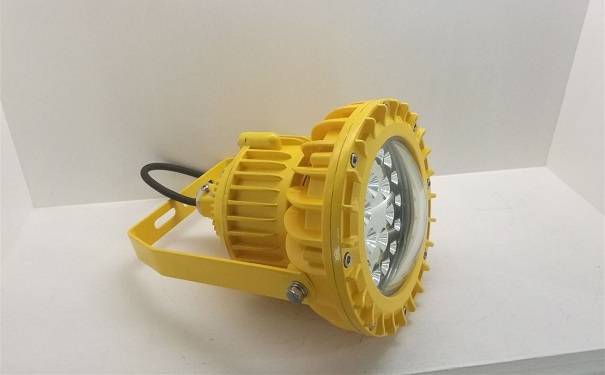
No matter where you are, as long as lighting is needed, the corresponding lamps must be used, and this is no exception on ships. The lamps used on ships are called marine lamps, which are generally divided into three types: ceiling lamps, energy-saving lamps, and wall lamps, etc. Different types of lamps have different functions. However, these lamps all share a common characteristic: they must meet the corresponding production requirements before they can be used. What are these requirements? The author has introduced them in the article, so hurry up and take a look!
What classifications are there for marine lamps?
1. Ceiling Lamps
Generally, commonly used ceiling lamps include square ceiling lamps, round ball ceiling lamps, pointed flat round ceiling lamps, half-round ball ceiling lamps, half-flat ball ceiling lamps, small rectangular ceiling lamps, etc. Marine lamp manufacturers indicate that ceiling lamps are usually suitable for use in various rooms, and different functional rooms can adopt this installation method to achieve the lighting effect.
2. Energy-Saving Lamps
Among marine lamps, the most widely used is the energy-saving lamp. Its brightness and lifespan are much longer than that of ordinary incandescent bulbs, and this type of bulb is very energy-efficient. High-quality marine lamp manufacturers indicate that energy-saving lamps come in U-shaped, spiral, petal shapes, etc., with power ranging from 4 watts to 30 watts.
3. Wall Lamps
Marine lamp manufacturers indicate that commonly used wall lamps include double-headed magnolia wall lamps, double-headed olive wall lamps, double-headed drum-shaped wall lamps, double-headed lace cup wall lamps, jade column wall lamps, and mirror wall lamps, etc. Well-known marine lamp manufacturers indicate that the installation height can be adjusted as needed. Moreover, these products are relatively moderately priced and come in various styles, making them very popular.

What requirements should marine lamps meet?
1. Marine lamps should have waterproof functions, and the lamp head should have a structure to prevent self-loosening. Marine lamps should use double filament bulbs, and their control box should be located in the cockpit. The switches and indicators on the control box should have nameplates to indicate their purpose. The cables of marine lamps should be secured, the sealing of the stuffing box, lampshade, and bulb should be intact, and grounding should be good and reliable. The insulation resistance of the marine lamp circuit should not be less than 1.0 megohm.
2. A transfer switch should be set on the marine lamp control box or in an appropriate position in the cockpit to allow for power source switching. Each marine lamp should be powered by an independent branch circuit drawn from a control box located in an easily accessible position in the cockpit, and each of these branches should be controlled and protected by switches and fuses or circuit breakers installed in that control box.
3. There should be an automatic indicator that can emit audible and visual alarm signals when each marine lamp fails. For example, if a light indicator connected in series with the marine lamp is used, measures should be taken to prevent the marine lamp from extinguishing due to the failure of the signal light. There should also be audible and visual alarms for power failure in the marine lamp control box.

After reading these introductions, do you have a better understanding of marine lamps? If you want to purchase this product, feel free to contact us!
Previous:

Contact Us

Telephone:13186631992 025-83569917
Fax: 025-84199977
E-mail:njtansuo@163.com
Address: No.10 Kaicheng Road, Qilin Gate, Jiangning District, Nanjing City, Jiangsu Province, China

sweep Focus on us