Welcome to the official website of Nanjing Tamso Optoelectronics Co., Ltd.
LED corridor lights: What are the specific classifications? The factors that cause light decay include the following!
Sep 24,2020
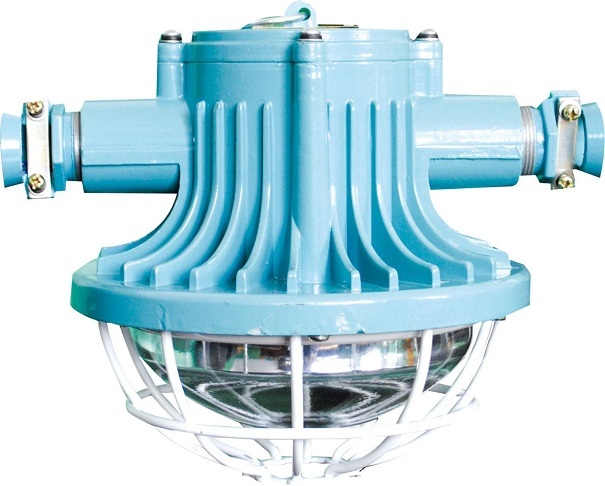
LED corridor lights are now widely used in our lives, and can be seen in industrial and manufacturing sectors. It can be said that they are very important to our lives. So what are their specific classifications? They are mainly classified according to the protection level of the shell and the supporting surface material of the lamp design, among others. In this article, I will provide a detailed introduction to the specific classifications of LED corridor lights and the factors that cause light decay.
Specific classifications of LED corridor lights:
In the industry, LED corridor lights are usually divided into two different types. Let's explore this in the article together:
1. Classified by the protection level of the shell
To protect against dust, solid foreign objects, and water entering the lamp chamber, which could touch or accumulate on live components causing arcing, short circuits, or damaging electrical insulation, various shell protection methods are employed to protect electrical insulation.
The protection level of the shell is represented by the letters "IP" followed by two digits. The first digit indicates the protection level against people, solid foreign objects, or dust, ranging from 0 to 6. LED corridor lights are a type of sealed lamp, with a dust protection level of at least 4. The second digit indicates the protection level against water, ranging from 0 to 8.
2. Classified by the supporting surface material of the lamp design
Indoor LED corridor lights may be installed on many surfaces made of ordinary combustible materials, such as wooden walls and ceilings, which do not allow the temperature of the installation surface of the LED corridor light to exceed safe values. They can be divided into two categories based on whether the LED corridor light can be directly installed on ordinary combustible material surfaces.

Factors causing light decay in LED corridor lights:
The light decay of LED products refers to the weakening of the signal during transmission. Currently, the degree of light decay in LED products made by manufacturers varies. Let's take a look:
1. Quality issues of LEDs
(1) The quality of the LED chips used is poor, leading to rapid brightness decay.
(1) There are defects in the production process, and the heat dissipation of the LED chips cannot be effectively conducted from the pins, causing the temperature of the LED chips to be too high, which exacerbates chip decay.
2. Issues with usage conditions
(1) LEDs are driven by constant current, and some LEDs use voltage driving, which causes LED decay.
(2) The driving current exceeds the rated driving conditions. In fact, there are many reasons for light decay in LED products, but the key issue is heat. Although many manufacturers do not pay special attention to heat dissipation in secondary products, the light decay of these secondary LED products will be higher than that of LED products that focus on heat dissipation over long-term use. The thermal resistance of the LED chips themselves, the impact of silver glue, the heat dissipation effect of the substrate, as well as the colloid and gold wire aspects are also related to light decay.

The above is what I have introduced regarding the specific classifications of LED corridor lights and the specific factors causing their light decay. If you have any questions, feel free to contact us!
Previous:

Contact Us

Telephone:13186631992 025-83569917
Fax: 025-84199977
E-mail:njtansuo@163.com
Address: No.10 Kaicheng Road, Qilin Gate, Jiangning District, Nanjing City, Jiangsu Province, China

sweep Focus on us