Welcome to the official website of Nanjing Tamso Optoelectronics Co., Ltd.

What are the key technologies used in LED bracket lights? Here are the reasons for choosing them!
Oct 09,2020
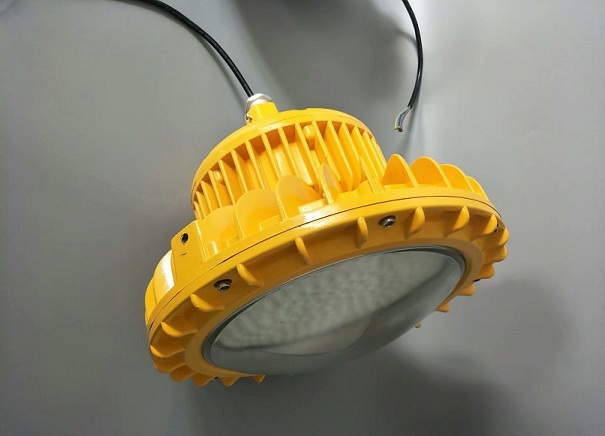
In the process of producing LED bracket lights, different technological processes are needed to meet its technical requirements, including several key technologies such as electrical performance, optical performance, and thermal performance, among others. These performances work together to help the bracket light operate normally. Why is it so popular, and why do so many people choose it? In this article, the editor will provide a detailed introduction to the key technologies used in LED bracket lights and the reasons for choosing them. Let's take a look in the article!
Key technologies used in LED bracket lights:
1. Electrical performance
The standards and parameters in the electronic field are often much more complex than structural ones, and the initial R&D investment is also considerable. The current technological trends and updates are changing rapidly, requiring significant effort to learn, absorb, decompose, and apply new technologies.
A preliminary plan for the power supply design of an LED bracket light must form a systematic document that includes product introduction, standard specifications, safety specifications, expected electrical performance values, process requirements, raw material assessments, testing methods, etc.
2. Optical performance
The optical performance of LED bracket lights mainly involves performance requirements related to luminous intensity, spectrum, and colorimetry. Key parameters include peak wavelength of light emission, spectral radiation bandwidth, axial luminous intensity angle, luminous flux, radiation flux, correlated color temperature, and color rendering index.
For commonly used white LEDs in LED bracket lights, color temperature, color rendering index, and illuminance are particularly important as they are key indicators of lighting atmosphere and effect, while color purity and dominant wavelength generally have no specific requirements.
3. Thermal performance
For LED lighting, luminous efficiency and power supply are one of the keys to the LED bracket light industry. The greater the difference between junction temperature and lamp body temperature, the greater the thermal resistance, which leads to light energy being wasted as heat. Severe consumption can cause LED damage.
A good bracket light must consider not only the structure of the bracket light and the thermal resistance of the LED but also whether the shape of the lamp is reasonable, fashionable, and novel, as well as reliability, maintainability, and practicality.

Reasons for choosing LED bracket lights:
1. From a practical application perspective, LED bracket lights have a wide range of applications. They can serve as the main light in living rooms and as lighting fixtures in bedrooms, corridors, bathrooms, and other places. Typically, consumers choose LED bracket lights first and then select other fixtures as auxiliary lighting, leading to high demand for LED bracket lights, with many needed for the same project.
2. From a retail perspective, many lighting retailers require LED bracket lights. They are now commonly found in lighting stores, allowing consumers to inquire and even see demonstrations when purchasing lighting fixtures. This enables consumers to experience the lighting effect directly on-site, quickly capturing retail display space and attracting consumers, making it a powerful tool for manufacturers to expand their market. This is also one of the reasons for the popularity of LED bracket lights.
3. In terms of price, due to mass production, the price of LED bracket lights tends to be more affordable. With technological advancements, the prices of chips, lamp beads, drivers, etc., have decreased, leading to lower costs. The light sources of bracket lights are mostly surface-mounted, which are comparable to traditional light sources but are more energy-efficient, making consumers more willing to accept LED bracket lights.
4. Easy and simple installation with a straightforward structure reduces a lot of hassle for users. Due to their long lifespan, the frequency of replacement is greatly reduced, saving users a lot of trouble, which is why they are very popular. Generally, they do not need to be touched for several years, and there are no other components that need to be replaced. Traditional lighting fixtures have a high failure rate, requiring regular replacement of ballasts or circular glass tubes, which is very troublesome.

The above is what the editor has introduced regarding the key technologies used in LED bracket lights and the reasons for choosing them. If you want to learn more, feel free to contact us!

Contact Us

Telephone:13186631992 025-83569917
Fax: 025-84199977
E-mail:njtansuo@163.com
Address: No.10 Kaicheng Road, Qilin Gate, Jiangning District, Nanjing City, Jiangsu Province, China

sweep Focus on us