Welcome to the official website of Nanjing Tamso Optoelectronics Co., Ltd.

Common Lighting Fixtures for Landscape Illumination and Their Design Steps
Oct 18,2019
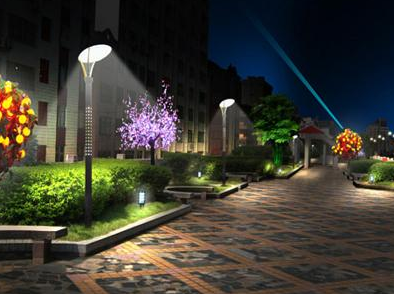
Landscape lighting projects refer to the illumination of buildings and scenic spots, which play a significant role in cities. So, what are the commonly used lighting fixtures for landscape lighting? What are the design steps? To this end, I have specially organized relevant information for everyone, so let's take a look together!

Commonly used lighting fixtures for landscape lighting:
1. LED Display Screen
LED display screen, abbreviated as LED, stands for Light Emitting Diode. It is a display method that controls semiconductor light-emitting diodes, typically composed of many red light-emitting diodes, which display characters by turning the lights on and off. It is used to display various information such as text, graphics, images, animations, market data, video, and recording signals.
2. LED Landscape Tree
LED landscape tree lights are a new type of simulated landscape light. They are environmentally friendly, have a long lifespan, and are aesthetically pleasing. The trunk and leaves of the LED landscape tree light are made of simulated materials, and the light source is LED, with a height generally ranging from 0.8 to 7 meters. The energy-saving and durable characteristics of LED landscape tree lights compensate for the shortcomings of traditional landscape lights, making them a revolutionary product in the same category. They are widely used in squares, courtyards, leisure plazas, lobbies, and other places.
3. LED Digital Tube
The LED seven-color contour light is controlled by a microcomputer chip, allowing for synchronized seven-color, gradient, chasing, flowing, scanning, running horse, stacking, and full-color 512 color effects. The more segments, the more delicate and smooth the effect. Full-color digital tubes can be classified into internal control or external control from the control system perspective, with internal control digital tubes being controlled by chips inside the tube.

4. LED String Lights
LED string lights use advanced LED semiconductor chips as light-emitting components, utilizing large-scale integrated control technology to achieve complex lighting changes and control effects. They are a replacement for traditional night scene lighting and decoration, being an environmentally friendly, energy-saving, high-tech, simple, bright, and richly controlled lighting and decorative source; they consume little power, generate little heat, have a long lifespan, are impact-resistant, and highly reliable.
5. LED Fiber Optic Lights
These lights integrate optical fibers and crystal reflective materials. The special reflection of crystals and light, along with unique manufacturing methods and processes, creates a dreamy and colorful visual effect, providing a warm and romantic feeling. They are the preferred decorative lighting products for entertainment venues and bathing centers, favored by many designers and nightclubs. They generate no heat, consume little power, and have a long lifespan; they come in various patterns, colors, and changes; their flowing light creates a vibrant and lively atmosphere.

Design steps for landscape lighting:
1. Determine the desired lighting art effect, which should be based on the attributes of the building's original color.
2. Choose suitable lighting, considering factors such as the color of the light source, color rendering, efficiency, and lifespan.
3. Decide on the required illuminance, which mainly depends on the brightness of the surrounding environment and the darkness of the building's exterior wall color.
4. Select appropriate lighting fixtures, considering not only the light distribution characteristics but also the shape, material, and dust and water resistance ratings.
5. Calculate the illuminance and the number of fixtures needed.
6. On-site debugging after installation.
Next:

Contact Us

Telephone:13186631992 025-83569917
Fax: 025-84199977
E-mail:njtansuo@163.com
Address: No.10 Kaicheng Road, Qilin Gate, Jiangning District, Nanjing City, Jiangsu Province, China

sweep Focus on us