Welcome to the official website of Nanjing Tamso Optoelectronics Co., Ltd.

What are the elements and implementation methods of building lighting design?
Dec 18,2019
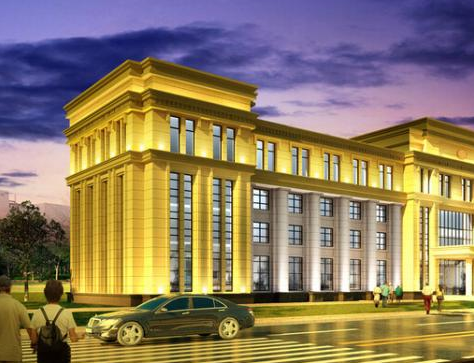
Energy saving and environmental protection are eternal topics. Lighting projects should keep pace with the times. To raise energy efficiency to a certain level, it is necessary to start from lighting design. Good lighting design is the foundation for effective energy saving in building lighting projects. The establishment of lighting operation plans and management systems for building lighting projects is the core of energy saving in building lighting. So, what are the methods for implementing building lighting projects? Below, I will briefly introduce them.
What are the elements of building lighting project design?
1. It should be compatible with the night scene plan. According to the layout of the urban master plan, the night scene lighting plan should correspond with the characteristics of the city and buildings. Different street styles and location characteristics of building lighting projects have different feelings in different situations and lighting of buildings, therefore, different locations should have different requirements.
2. It should be combined with urban planning. Urban night scene lighting should be closely integrated with urban planning, and building lighting is a component of urban planning. Building lighting should focus on establishing iconic projects that reflect the characteristics of a city, not just for the sake of lighting. It should also have a high artistic sense, becoming a classic work of the city.
3. It should be closely linked to urban construction. A city's lighting project should proceed in sync with construction, planning, and implementation. Building lighting projects can advance together with municipal projects, key cultural relics, and the renovation of building facades.
4. It should be combined with other lighting. The composition of different urban landscapes should include natural and artificial structures. Building lighting includes both large structures and small decorative pieces, some focusing on functionality while others emphasize aesthetic appreciation. The focus has shifted from functionality to a balance of usability and aesthetics. In the future, there should be continuous, standardized, and planned expansion and improvement of technology and artistic levels.

Methods for implementing building lighting projects:
1. Indirectly or directly make reasonable use of natural light, such as skylights, light wells, and light-transmitting windows.
2. If conditions permit, install solar devices to convert natural light into electrical energy, thereby using artificial light, saving energy, and reducing the load on the power grid.
3. Choose appropriate lighting modes and reasonable intelligent lighting control systems to achieve multi-switch, multi-line, and multi-infrared ultrasonic control, creating different scenes and atmospheres. It can be said that energy saving and lighting can achieve two goals at once.
4. Use light sources with high luminous efficiency and long lifespan, and use low-power, high-performance energy-saving lighting ballasts.
Previous:

Contact Us

Telephone:13186631992 025-83569917
Fax: 025-84199977
E-mail:njtansuo@163.com
Address: No.10 Kaicheng Road, Qilin Gate, Jiangning District, Nanjing City, Jiangsu Province, China

sweep Focus on us